


Safita Castle
Discover our latest travel stories, tips, and insights
Apr 01, 2026
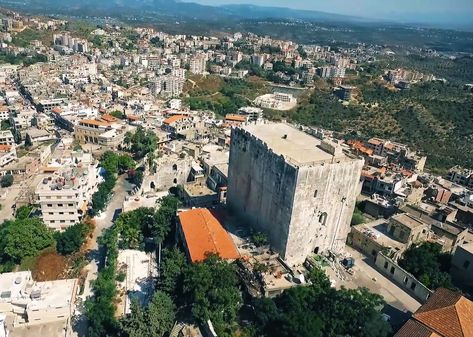
Crowning the hilltop heart of Safita, the White Tower — as Crusaders once called it — rises as the last great remnant of a fortress that watched over Syria’s coastal mountains for nearly nine centuries. Built upon ancient Phoenician foundations, the present keep took shape under the Knights Templar in the mid 12th century, its pale limestone walls gleaming as a beacon visible from the sea and neighboring strongholds. From this vantage, Templar sentinels could signal to Tartus, Arwad Island, and even Krak des Chevaliers, forming a chain of watchfires across the horizon. The tower endured the tremors of the 1170 and 1202 earthquakes, the sieges of Nur al Din and Saladin, and finally the assault of Sultan Baibars in 1271, after which it passed into Muslim hands. Remarkably, its ground floor chapel — now the Church of St. Michael — has remained in continuous use, making Safita’s Castle not only a monument of stone and strategy, but a living thread in the fabric of the town’s spiritual and communal life.
Activity ideas:
• Explore the ground floor chapel which is the Greek Orthodox Church of St. Michael.
• Wander Safita’s old town and visit the local souk.
Activity ideas:
• Explore the ground floor chapel which is the Greek Orthodox Church of St. Michael.
• Wander Safita’s old town and visit the local souk.